Monday, June 5, 2017

His Mother's Son


This is my entry in the Dean Martin Blogathon hosted by Musings of a Classic Film Addict.


Dean Martin was a singer who successfully made the transition from singer to actor.  For every success in this endeavor (like Mark Walberg), there are probably at least ½ dozen who proved that it wasn't always easy. And some who proved that it was a HUGE mistake to even try... (Neil Diamond comes to mind, here. as does Mariah Carey.)

Martin had previously starred with Wayne in Howard Hawks' classic movie Rio Bravo, and he had a career both before and after in a variety of movies.  He was Matt Helm, a sort of counterpoint to James Bond, in several movies (The Silencers, Murderer's Row, The Wrecking Crew and The Ambushers).   He was also a part of the Rat Pack and appeared with Frank Sinatra and sammy Davis, Jr in the original Ocean's 11.  Not to mention a plethora of movies in which he starred with his comedy team partner, Jerry Lewis.


The Sons of Katie Elder (1965)


Dean Martin plays one of four sons of Katie Elder.  They have come to Clearwater to attend the funeral of their mother.  Tom (Dean Martin), Matt (Earl Holliman) and Bud (Michael Anderson, Jr.) wait for their big brother, John (John Wayne) at the train station, but John doesn't arrive on the train.  An unknown man, later revealed to be a hired gunman, Curley (George Kennedy), does.


The star of the movie, of course, is John Wayne, but Martin does a great job in the co-star role.  He plays a gambler, and is constantly trying to entice people into bets on the most ridiculous chances (including trying to get his brothers to bet him on where the train will stop in the early part of the movie).


The brothers, minus John, go to Katie's funeral (but John is there, albeit from a distance).


The boys expect to back to Katie's ranch, but unfortunately, sometime in the preceding months, The Elder boys' dad has gambled away the farm and it now belongs to Morgan Hastings (James Gregory), the same man who has hired Curley to come to his aid.  He certainly can't depend on his own son, a wimpy little weasel played by Dennis Hopper.


Why would a legitimate owner hire a gunman to protect his interests?  Could it possibly be because the supposedly law-abiding citizen has not actually acquired the land by the means he claims?  Well, if you know your western tropes, you already know the answer to that question.  Especially since we find out that Daddy was shot in the back, and his murderer has not yet been discovered.

Martin shines here as brother Tom.  And he has a hidden past.  He shot a man in self-defense, but ran away from the town before he could be brought to trial, since as an outsider and a notorious gambler, it would have been his word against the entire town, all of whom were respected friends of his victim.


 Of course, you know this comes back to haunt him when the sheriff of Clearwater, Billy (Paul Fix) and his deputy, Ben (Jeremy Slate), get wind of it.


To complicate matters, while Billy is at the Elder place, he is shot and killed by Hastings, who then proceeds to frame the Elder boys for the killing.  But not content with just framing them, he also arranges for an ambush to occur while they are being transported from Clearwater to Laredo (the reason for the transport being to keep the boys safe from being lynched before a trial can occur).

You can't get past a John Wayne movie without acknowledging Wayne.  Wayne is the most clear-headed of the brothers, acting as the voice of reason despite his brothers' tendency to want to solve their problems expeditiously (read: with violence).  Wayne is determined to keep his brothers in check, even if it means beating the crap out of them to do it.

But as the second oldest, Martin as Tom is the most endearing character. he has an insouciant charm that makes him the most memorable brother.  (Despite my love of Wayne, he is pretty much the same character he has played dozens of times previously before this movie.)  If you want to know how it all comes out, you haven't watched enough westerns.  But the way it turns out is still a classic finale.  Although (Spoiler Alert!) only three brothers survive to the end.  You'll have to watch the movie to see which one meets his end, though.

Well, that about wraps up this time at the drive-in.  Drive home safely, folks.

Quiggy

Sunday, May 28, 2017

Mr. Monk and his OCD


This is my entry in the Medicine in the Movies Blogathon hosted by Charlene's (Mostly) Classic Movie Reviews.


Adrian Monk was the title character on the USA TV series Monk. A little background to the character, garnered over the span of the series:
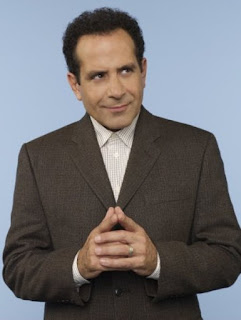

Tony Shalhoub as Adrian Monk


Adrian Monk was born in 1959 to a later absent father and a rather over-protective mother.  He had one brother, Ambrose (John Turturro), who later developed agoraphobia, and by the time of the first encounter on the series, remained a recluse in his childhood home.  Monk is viewed by his brother as the braver, more adventurous brother, as a result, because Adrian actually went out into the world, got a job in the police department, and actually got married.

Adrian did get married, and while his OCD tendencies were present during his tenure, he managed to be a productive officer.  All this came crashing down when his wife, Trudy (sometimes seen as a halluciation by Monk in times of stress, played by Stellina Rusich in the early episodes and by Melora Hardin for the remainder of the series), was killed by a car bomb.  Monk became catatonic and was out of it for a long period of time, but his boss, Capt. Leland Stottlemeyer (Ted Levine) hired a personal nurse, Sharona Fleming (Bitty Schram), to help him through this time.

By the start of the series, Sharona has been with him for several years.  She serves in the first two seasons as his driving force to get him to focus on his job, which is as a consultant to the police force.  Sharona treats Monk as a patient but somewhat demanding person would a unruly child.  Later, (after Bitty Schram left the series), this role would be taken over by Natalie Teeger (Traylor Howard), a former client who becomes Monk's assistant in his crime solving capers.

Much of the series has, as a subplot, Monk's efforts to get to the bottom of who was involved and why his wife was murdered.  (In fact, most of the series' final episodes of the season centered on his attempts to do this.) Because of his obsession with the loss of his wife and his inability to come terms with it until the mystery is solved,  he spends time with a psychiatrist at regular intervals.

Dr. Charles Kroger (Stanley Kamel) serves in this capacity for the first six seasons.  After the unfortunate death of Dr. Kroger (due to the fact that Kamel himself had died in real life), this psychiatric relationship was taken over by Dr. Neven Bell (Hector Elizondo).  Also a recurring character is Harold Krenshaw (Tim Bagley), a man with many of the same issues as Monk and thus a constant thorn in Monk's side as each one tries to prove to the other that they are crazier than their respective nemeses. (Now if that ain't sick, I don't know the meaning of the word...)


Monk has a list of phobias a mile long, including germs (he constantly cleans his hands after shaking hands or touching things that are dirty), heights (he's even afraid to get on the first step of a two step ladder), crowds (an extension of his fear of germs),  and milk.  Monk is usually immaculately dressed, but I guess he must have a phobia for ties, since he never wears one.  Maybe he just has a fear of strangulation, but then who, outside of a masochist, doesn't?

 It is significant that, not only does his assistant Natalie have to carry around a list of his phobias, but it is hinted at on at least one or two occasions that there is a ranking of the phobias in order of which is the most horrifying.  It is a credit to his OCD that he has to rank them, I think.


Monk's relationship with his psychiatrist is highly dependent, sometimes bordering on obsessive.  In order to really delve into the psychoses of Monk, I have chosen a handful of episodes which center more or less on Monk and how he has to deal with Drs. Kroger and Bell.
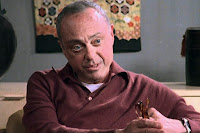

Stanley Kamel as Dr. Kroger
Hector Elizondo as Dr. Bell


Most of the first two seasons of Monk only deal peripherally with Monk's relationship to his therapist.  We continually find out more about the character, including his phobias and obsessions (including his need to have everything in order.  At one point in season 2 episode "Mr Monk Goes Back to School" Monk pours decaf and regular coffee together in a teacher's lounge, in an attempt to make them at even levels, despite the fact that they are two different coffees).


Season 3: " Mr. Monk Takes His Medicine"

One of Monk's fears is pills.  At the beginning of this episode, Monk is extremely distraught over the apparent slow success (or lack of success) in getting cured of his psychoses.  Kroger gives him some pills that are supposed to have some success  in curbing depression, but Monk is reluctant to take them. However, when he is really down, at one point, he succumbs to the desire to be free of his depression and takes them.

Kroger suggests only a half a pill at a time, but if you pay attention, when Monk takes them, he swallows two pills.  There is a serious side effect to this overdose, however.  Sure he loses his depression, but he also becomes extremely un-Monk-like.  He loses most of his phobias, and becomes extremely rebellious.  He also appears to lose the focus he usually has, and becomes mostly useless to the investigation of the crime he has been called in to investigate.


Season 5: "Mr. Monk Gets a New Shrink "

This episode had one of the more direct and expansive involvements with Dr. Kroger.  In it, the doctor's maid service employee, Teresa Mueller (Lisa DEmpsey), gets murdered while cleaning Kroger's office.  The evidence initially seems to suggest that a patient of Kroger's was trying to raid his files and got caught, instigating a need to murder the woman.

Dr. Kroger, aghast that he did not see it coming, decides to retire from his practice.  Monk, devastated because of his dependency on Kroger as his psychiatrist, tries many different tactics to try to get his weekly sessions, including showing up at Kroger's house.  Kroger arranges for Monk to have a new therapist, highly recommended, but Monk has a serious issue because the new doctor (Kevin Fry) has only one arm.  (And as a side note, Tony Shalhoub insisted that the character be played by a one-armed actor, so it's not just camera trickery.  The actor only has one arm.)


Eventually, to the relief of Monk own psyche as well as his relationship with Kroger, it is determined that it was NOT one of Kroger's patients who committed the crime.  In the process of solving the case, however, we get to see a little more insight into how Monk's OCD has a hold on him.  In one scene, he and Kroger are kidnapped, tied to chairs and put in the back of a van.  Monk insists that they move themselves into a position resembling a session and Monk begins in as if it really were a session.


As stated earlier in this post, Stanley Kamel, the actor portraying Dr. Kroger, died between the end of season 6 and the beginning of season 7.  In the series, it was established that Dr. Kroger had died, too. As a result, Monk had to find a new therapist.  Enter Dr. Nevin Bell.  It is a rocky start, of course, but Monk manages to establish a good rapport with Bell by the middle of season 7.

Season 7: "Mr. Monk Gets Hypnotized"

Seeing some success in Harold Krenshaw, due to Krenshaw's having gone to a hypnotist, Monk tries the hypnotist for himself.  As in the episode "Mr. Monk Takes His Medicine", Monk has a disastrous side effect from the hypnotism and becomes extremely child like.  (He finds and becomes friends with a pet frog he calls "Hoppy").  Dr. Bell tries to warn him beforehand of the unreliability of hypnotism, but Monk is, as usual, desperate to be "normal", so he ignores his therapists advice.


Season 8: "Mr. Monk Goes to Group Therapy "

Late towards the end of the final season of "Monk", our hero receives some devastating news from his HMO; he has reached the end of what his insurance covers in private sessions.  Of course, Monk thinks this is the end at last, but it is established he can still go to his psychiatrist, but only to group therapy sessions.

The problem with that is that Monk does not deal well with others, and the most frustrating part of it is his nemesis Harold Krenshaw is also a member of the group.  The two are at constant odds with each other, as usual.  And when other members of the group are being killed, both try to accuse each other of killing them so they can have Dr. Bell for themselves.


The good news is that the series ends with Monk finally finding out the truth behind Trudy's murder and capturing the culprit.  In the process, by that success, Monk becomes more like a normal, functioning human being.  You should check out this series.  "Monk" was awarded several Emmys, including a couple to Shalhoub as Best Actor.  It is a very entertaining series.

Quiggy

Saturday, May 27, 2017

Black Magic in Chinatown


This is my entry in the Favorite Director Blogathon hosted by yours truly and Phyllis Loves Classic Movies


My first introduction to John Carpenter was with Escape from New York.  I instantly became a Carpenter fan.  Over the ensuing years, I made a point to go see each new movie that Carpenter put out.  It is curious then that this one escaped my notice when it was in the theater.  I didn't actually get to see it until it was out on video.  Perhaps that is part of the reason why it ranks as my favorite Carpenter movie.  (Not the ONLY reason, to be sure.  The plot and the presence of Kurt Russell has a lot to do with it too...)

The script started out in life as a Western, if you can believe it.  The script was given an extensive re-write by W. D. Richter, a great scriptwriter in his own right who, among other scripts, worked on the scripts for the 1970's remakes of both Invasion of the Body Snatchers and Dracula.  He also directed (but not wrote) one of my other favorite movies, The Adventures of Buckaroo Banzai.

The movie was made at the same time as the Eddie Murphy flick The Golden Child.  In fact, there was a concerted effort to get this movie in the theater before the Eddie Murphy movie because it was thought that it would flounder in competition with a movie that had the superstar.  As it turned out, it didn't matter anyway.  The movie bombed at the box office.  But it has something going for it in it's after life.  It is more fondly admired than the turkey Eddie Murphy put out.  It has a HUGE cult fan base (of which I am one).


Carpenter with Hong in his Lo Pan makeup


Carpenter's output has been largely in the horror genre.  His output includes the original introduction to slasher extraordinaire Michael Myers, Halloween, The Fog, the remake of The Thing, the film adaptation of Stephen King's Christine, as well as the previously reviewed They Live.   He has also delved in the sci-fi world, as evidenced by Starman and two features, previously reviewed, with the anti-hero Snake Plissken, Escape from New York and Escape from L.A.

Early Carpenter work includes a TV movie about Elvis (featuring today's movie's star, Kurt Russell), and an excellent nail-biting remake of sorts of the classic John Wayne flick, Rio Bravo, set in modern day, Assault on Precinct 13.  Not all of Carpenter's works have been gems, however.  (Take my advice and avoid Memoirs of an Invisible Man at all costs...)  But Carpenter has made more hits that are genuinely revered by people, like me, who like his kind of movies, and you can guarantee this won't be the last time I review one of his movies.  Just waiting for the right moment (or the right blogathon...) 


Big Trouble in Little China (1986)

Jack Burton (Russell) is an independent truck driver owner/operator of "The Pork Chop Express".  At the beginning of the movie he is driving a load of cargo into San Francisco, specifically Chinatown.  After dropping his load, he spends an evening indulging in some of the delights of Chinatown, including food and gambling with dock workers.  At the end of the evening (actually early morning, by this time) he makes a bet with his friend Wang Chi (Dennis Dun) which he wins.


But Wang hasn't got the money, so Burton accompanies him to get it.  But before this can happen Wang has to go to the airport to pick up his fiancee, Miao Yin (Suzee Pai), freshly coming in from China.  While there, members of a Chinese street gang, The Lords of Death, try to kidnap another Chinese girl, Tara (Min Luong), a friend of Gracie Law (Kim Cattrall).


Burton foils the kidnapping, but in the process, Miao Yin is kidnapped instead.  Burton and Wang give chase and end up back on the streets of Chinatown.  There they encounter a funeral procession for a member of the Wing Kong (the good tong).  Members of Chang Sing (the bad tong) interrupt the funeral procession and a mini-war breaks out.


But this battle is interrupted by the three "Storms", three brothers with phenomenal powers; Thunder (Carter Wong), Lightning (Peter Kwong) and Rain (James Pax).


 These three make short work of the two gangs, but the  two heroes don't stick around.  They drive off, but run over, seemingly, a wizard, David Lo Pan.


Lo Pan is the villain of the piece, so you just know he is not killed.  Jack and Wang go to Wang's father's restaurant where the plot becomes even more complicated.  First it turns out that everybody but Jack knows Gracie.  Then we find out that the reason that Miao was kidnapped is she has green eyes (apparently a rarity among Chinese people).  She is being held in a brothel in Chinatown.

The heroes enlist the help of Egg Chen (Victor Wong) to rescue Miao, but the plan falls through because the three storms show up and kidnap her from the brothel.  Now we find out that Lo Pan is older than Methuselah.  He is cursed by an ancient emperor and the only way he can remove the curse is to marry a Chinese girl with green eyes.  But the only problem with that is that he must sacrifice her after he marries her.  Which makes it a little easier, so he thinks, when he captures Gracie, who also has green eyes.  He plans to marry them both, sacrificing Gracie to the Emperor and living out his life in joy with Miao.


The film is replete with Chinese black magic.  To counteract it, Egg Chen comes along with his own brand of white magic.  You can see it for yourself even in the beginning of the movie. A beginning, BTW, that was demanded by Barry Diller and the executives at 20th Century Fox because they didn't understand the movie and were afraid that Jack Burton's character did not come off heroic enough.  That's Barry Diller conducting the interview with Egg in that scene.  It was a last minute addition after all the rest of the movie had been wrapped up.  The original movie was intended to start with Burton driving into Chinatown (the part where the opening credits roll).

The white magic that Egg uses includes potions to help the heroes be brave in the face of the monsters and traps that lo Pan has set up, and also to do battle with his guards.  Not that Burton really needs it.  He's a gung ho, devil-may-care type with an over inflated sense of his own bravado, but it gives us some great moments in the movie.  And the movie is funny as all get out, if you can appreciate the humor.  One of my favorite lines in the movie is when Jack and Wang come up along a door with Chinese writing on it.

Jack: "What does that say?
Wang: "Hell of Burning Oil".
Jack: "You're kidding?"
Wang: "Yeah.  I am.  It just says Keep Out."

All of this leads up to the final confrontation between our good guys and Lo Pan and the Three Storms. And of course the saving of the damsels in distress.  Big Trouble in Little China is a great place to start with Carpenter, especially if you are a little squeamish about blood and gore and don't want to experience Halloween or The Thing.


Keep in mind there are a whole raft of other great directors in this blogathon.  Be sure to check them out.

Quiggy


Friday, May 26, 2017

The Favorite Director Blogathon Stats Today!


The Favorite Director Blogathon gets underway today.  For those of you who have already entered you can post any of the four days you wish.  If you posted early, it will be added.  And last minute entries will still be accepted if you want to join in the fun. We have decided to do just do one post and update it continuously as entries come in, so keep checking back here & on Phyllis Loves Classic Movies to see new entries as they come in.  Hope you get time to read and enjoy every one.


The Roll Call:  (These will be updated as newer entries come in)

Angelman's Place gives us the story of a happy occasion for a woman (or, maybe not so much...).


Roman Polanski's Rosemary's Baby (1968)


Cinematic Scribblings delves into family life, Japanese style.


Yasujiro Ozu's Late Spring (1949)


Love Letters to Old Hollywood gives us some insight into the world Billy Wilder's The Apartment.


 Billy Wilder's The Apartment


Classic Movie Treasures tells us how hard John Ford had to work to get his dream picture made.


John Ford's The Quiet Man (1952)


Caftan Woman enlightens us with two William Wyler westerns.


William Wyler's Hell's Heroes and The Big Country


Plot and Theme delves into the production of and background of a Kubrick masterpiece.


Stanley Kubrick's Dr. Strangelove (1964)


John V's Eclectic Avenue  gives insight into the world of director Jacques Tourneur


Jacques Tourneur's World


Anybody Got a Match  shows Stanley Donen's take on a Hitchcock style movie


Stanley Donen's Charade (1963)

Demanded Critical Reviews makes a point we shouldn't leave out the Russian auteurs.


Andrei Tarkovsky's Stalker (1979)


Christina Wehner  shares a love for director William Wellman


William Wellman

The Midnite Drive-In (ME) wants you to take a look at horror master John Carpenter.


John Carpenter's Big Trouble in Little China (1986)


Pure Entertainment Preservation Society extols the wonders of George Cukor


George Cukor

Hamlette's Soliloquy gives an in-depth study of a classic western.


John Ford's The Searchers (1956)

Charlene's (Mostly) Classic Movie Reviews takes a look at a Swedish classic.


Ingmar Bergman's Through a Glass Darkly (1961)


Reelweegiemidget  pays tribute to a tribute to my second favorite director, Ed wood


Tim Burton's Ed Wood (1994)


Crítica Retrô extols the wizardry of  Orson Welles


Orson Welles


Phyllis Loves Classic Movies (my co-host) delves into a classic writer/director relationship


Frank Capra and Robert Riskin


Champagne for Lunch discusses the output of Mervyn LeRoy


Mervyn LeRoy


LA Explorer presents a view on a Preston Sturges classic


Preston Sturges' The Miracle of Morgan's Creek (1944)


Well, that about wraps it up for this blogathon.  Hope you all had fun.


Quiggy