Saturday, December 30, 2017
Small Towns, Big Dreams
This is my second entry in the Inspirational Heroes Blogathon hosted by Hamlette's Soliloquy and The Midnite Drive-In (yours truly)
Spoiler Alert! If you have any intention of watching this movie without knowing how it ends beforehand, be forewarned. There is absolutely no way to discuss it and it's inspirational impact without revealing the ending, since it is based on a true story. Go watch the movie, then come back and read this review.
Before the actual review, a personal reminiscence: I grew up in a small town in north Texas, probably roughly the same size as this fictional town presented in the movie. One of the scenes that stands out for me is the caravan of people from the town heading out to an away game for the Hickory Huskers. This is (or was) pretty true to life in my hometown. Often the whole town would roll up the sidewalks and head out to follow the team, especially if we were in the playoffs. And my high school basketball team won state in 1972 (they were 1-A back then, but now are big enough to be 3-A). As I will clarify later, most states have rankings that delineate according to enrollment. In 1972 the population of my hometown was only a little of 700, and the whole school from 1st grade to 12th grade probably had less than 250 kids.
There is something about the little guy taking down a big guy that leads to real inspiration. Think of the classic Biblical story of David taking down the giant Goliath. Whenever an undersized and weaker opponent takes on a behemoth, you can't help but stand up and cheer.
Hoosiers is a film based on a true story of just about those same ideas. Up until 1997, Indiana had a one state wide school championship for athletics. (By contrast, in Texas there are currently 10 separate divisions, delineated by the enrollment size of each school.) But in Indiana, for years, it was just one winner-take-all title. This meant that many teams could advance in the tournament, but usually fell to larger schools later in the rounds.
The story of the rise of the Milan Indians is encapsulated in the movie. The Milan Indians of 1953/54, a small school, went on to win the state championship in high school basketball that year, although, to be fair, the movie takes a lot of liberties with the true story in the interest of capturing the audience's fascination. For instance, while the movie captures some of the essence of the newly hired head coach (played by Gene Hackman), the actual coach of the Milan team had been on hand for two seasons prior to the championship season. And, although the Hickory Huskers succeed in their efforts with a bare minimum of players, the Milan team actually had 12 players on the team. Still, the essence is there, and you may or may not be disappointed with it's lapses in being true to the facts, but you won't be able to argue that it's not an inspiring movie.
A few interesting tidbits; One: you may or may not recognize any of the players who star as the high school team players. Nearly every one of them were locals in Indiana, due to budget constraints for the picture, and who were hired strictly because they could play basketball. Not that you would be distracted by their inability to act, because each one did pull of the role fairly well. (I think one of them actually went on to become a motivational speaker, but I don't think any of them garnered more than a handful of roles in film after this.)
Two: Gene Hackman confided with Dennis Hopper that he thought this movie would ruin their respective careers. He couldn't be more wrong. Hopper was nominated for an Oscar and Hackman became a bigger name himself in Hollywood directly as a result of this movie.
The actor who played star player Jimmy Chitwood (Maris Valainis) was actually cut by his high school team several times, yet in the movie, the scenes where he is shown shooting and making shots were nearly all done in one take. In other words, the actor was a pretty damn good shooter, despite his travails at being on the team.
Hoosiers (1986):
On a clear morning in the country, Norman Dale (Gene Hackman) makes his way to his new job. He has been hired to coach basketball for the Hickory Huskers in the small Podunk town of Hickory in Indiana. Early on we learn that Dale was hired by an old chum, the principal of Hickory, Cletus Summers (Sheb Wooley), who is giving Dale a second chance. See, the old coach had died unexpectedly over the previous summer, and Hickory was in desperate need of a new coach. Dale had spent the last few years in the Navy and was just returning to coaching after a departure. (We later learn in the movie that he was banned from coaching in another state years ago for hitting one of his players.)
Dale meets up with Myra Fleener (Barbara Hershey) who expresses disappointment in finding that the new coach is so old. She tells Dale that she wants him to stay away from Jimmy Chitwood (Maris Valainis), the town's superstar b-baller. She has great plans for Jimmy to advance to college on an academic scholarship, one that doesn't hinge on his athletic abilities. She expresses disdain for athletics, claiming she has seen too many men and boys spend their whole lives in dead-end jobs in dead-end towns, reliving the glories of their athletic days with nothing to show for it. (Obviously Norman and Myra's relationship as co-workers is off to a rocky start...) Chitwood for his part had gone into a serious depression and had quit basketball after the death of his coach (and probably father figure, since it is indicated that his parents are dead, too.)
Dale gets off to another rocky start at his first practice. He reprimands one player for not paying attention, which causes the player to leave the practice in disgust, taking his best friend with him, and leaving Dale with the bare minimum of a squad.
He also manages to alienate many of the town's menfolk who are used to being able to watch the team practice, and especially George (Chelcie Ross) who had been coaching the team after the death of the old coach. Rollin (Robert Swan) approaches the coach with his recalcitrant son in tow to have Dale reinstate the son on the team, and in the process makes all he menfolk leave dale alone to his coaching duties.
Early on, Dale's coaching scheme is somewhat confusing and seemingly outre to the townsfolk, coupled with the fact that the team loses the first few games in the season. The town is almost apoplectic, since basketball is almost like a second religion in the state. (Much like football is here in Texas...) In the meantime, Myra has discovered Dale's true past (referenced above). When the town decides to call a referendum to vote on Dale's future as a head coach in the school, she tells Dale of her intent to reveal what she has learned at the meeting.
That night at the meeting however, she declines to be forthright in her intention and instead urges those present to give Dale a chance. Jimmy Chitwood, who has been observing the coach, comes forward just after the secret ballot has been cast, but while it is still being counted, that he wants to rejoin the team, but only if Dale is going to be the coach. However, the townsfolk have already decided to dismiss Dale. But an immediate re-vote is called after Jimmy's revelation and Dale is, of course, kept on as coach.
With "Shooter" Flack (Dennis Hopper), alcoholic father of one of the boys, and with the addition of Jimmy in the lineup, the town's team goes on a winning streak that could only happen in Hollywood (or in the dreamland of 50's Indiana...). They continue to win and eventually advance into the playoffs.
In reference to Shooter, he is a hard-bitten alcoholic, and, although he tries hard to stay sober for the good of the team and his new-found usefulness, he doesn't succeed throughout the movie. In this movie, Dennis Hopper pulls off a very well earned nomination for Best Supporting Actor (which he lost to Michael Caine). Hopper had a special care for the role as he was in recovery himself. In fact, the original script had Shooter skipping out of the rehab center where he was sent in order to watch the game in person, but Hopper insisted that that would be wrong for the character. Despite the writers' (and director's) objection to the change, they filmed it as Hopper thought it should be, with Shooter remaining at the rehab and just listening to the game on the radio. And that proved to be the better solution after all.
The basketball games scenes are the most adrenaline pumping scenes of the movie. I've watched this movie a dozen times or more and I was amazed when I learned that only about 6 minutes of film time involve actual scenes on the court. Yet, especially with the scenes taking place in the finals game, the rousing inspiration which caused me to add this movie to the blogathon is really evident. True to fact, the small town Hickory team does indeed appear small against the giant from South Bend Central. And true to fact, the final result depends on the final shot coming as a buzzer beater to win the game.
You can't help but be drawn into the characters in this movie, the only downside in my opinion was the director's need to create some sort of May-December relationship between Dale and Myra. Was it really necessary? Maybe in terms of drawing a female audience into the picture, but in my opinion the two could have developed a handshaking acquaintance and it would not have detracted from the emotional impact of the two changing from a somewhat hostile relationship to one of a more friendly nature.
More so than any other movie I have seen, this is one that really gives one an incentive to stand up and cheer at the end of the movie. And there is something that is sorely missing these days. I understand it was not uncommon back as late as the 50's and maybe even 60's for theater audiences to actually stand and applaud films like this, despite the fact that the actors were not present to receive the accolades. So ring in the new year with a new faith in the common man to overcome the odds and prevail by watching this one, and perhaps even you too may stand and cheer at the end.
Quiggy
Friday, December 29, 2017
Low Rent Gym Rats
This is my first entry in the Inspirational Heroes Blogathon hosted by Hamlette's Soliloquy and The Midnite Drive-In (yours truly)
Sometimes life gets up and slaps you in the face, just to get your attention. The appeal of Rocky derives that appeal just from that ideal. Before steroids turned Sylvester Stallone into a kind of parody of himself, he was the original average Joe as Rocky Balboa, a low rent gym rat who fought in local bouts and had no bigger dreams than just to have another go on the canvas.
Rocky was the genesis of Stallone, an actor who also wanted to be a screenwriter. He peddled his story of Rocky Balboa all over Hollywood, and was mostly turned down. No one wanted to make a boxing movie. Boxing as a screen topic was thought to be a financial whirlpool. Gone were the days when an inspiring movie about a real life boxing hero might be expected to bring in money. Biopics like The Joe Louis Story and Gentleman Jim (about "Gentleman Jim" Corbett) could be expected to draw some crowds in the past, but, with the exception of Muhammad Ali, there were no real heroes in the boxing world whose story could be expected to draw an audience, at least in the late 70's.
Stallone had one other stipulation that added to his struggle to get the movie made; he wanted to star as Rocky Balboa. But he was virtually an unknown at the time. His previous work on film had been limited to mostly uncredited walk-ons. Granted he had achieved some recognition as Stanley in The Lords of Flatbush, and was memorable as a competitor, "Machine Gun Joe" Viterbo, in the Roger Corman classic, Death Race 2000, but was otherwise a nameless face in Hollywood as far as his cinematic career was concerned.
When he finally found an interested party in making his script into a movie, the powers that be considered several well-known names for the title role, including Burt Reynolds and James Caan. (Or...consider the role being played by Robert Redford, another actor who was contemplated to play Rocky. OK, maybe Reynolds or Caan I could see, but Redford???) But Stallone was adamant about his position and eventually prevailed.
The background story in getting Rocky to film is inspirational enough, but the movie is one to really make people want to stand up and cheer. It was this movie, coupled with the Bonnie Tyler song which inspired this blogathon that really got my juices boiling on inspiration. It is a feel good movie that can make the viewer want to get up and go out and beat the odds on his or her own personal endeavors.
Rocky (1976):
There is something about Rocky Balboa (Sylvester Stallone) that induces pathos in the average viewer. He is an average Joe who is just trying to get along in a gritty world. He fights in low budget fights in his local gym, making probably just barely enough to pay for the bandages and antiseptic to heal for the next bout.
His real job is as a collector for a loan shark. But Rocky has a good heart and doesn't like to bully the deadbeats who are not paying up their debts. This doesn't set real well with the loan shark, but he is sort of a father figure to Rocky and tries to encourage him., even showing an interesting in his boxing sideline.
Rocky lives alone with his turtles and a goldfish, in a dingy apartment in Philadelphia. His best friend, Paulie (Burt Young) is his only real human companionship.
Paulie's sister, Adrian (Talia Shire), is a source of unrequited love, since Adrian is shy and mousey and doesn't seem to even notice the attention Rocky strives to give her.
At the same time, the current heavyweight champion, Apollo Creed (Carl Weathers), is struggling with his own demon. He has planned a bout to usher in the bicentennial year of 1976, to be fought on New Years Day, but his scheduled opponent has had to back out. Ever the self-promoter, Creed wants to fight just a scheduled, but is left to find an opponent who is willing and healthy enough to be ready in just six weeks. (It's Thanksgiving when Creed finds out the bad news about his scheduled opponent.) Creed comes up with a great promotional idea that will fit the bill. He will fight an unknown, thus giving the idea that anyone can achieve his chance at stardom, even if he is a common ordinary everyman.
Creed and his promoters settle on Rocky because Creed likes his fighting moniker, "The Italian Stallion", since Italians had originally discovered America. (Yes, to all you fellow iconoclasts out there, it has been revealed in recent times that Columbus was not the first, but this is the movies and they can use any accepted belief they want). Rocky receives word from his former gym manager, Mickey (Burgess Meredith), that he is wanted for a fight. Mickey, who had previously kicked Rocky out of his gym, now wants to help him train for his imminent fight.
Everybody wants a piece of the action, to attach themselves to this rising star. Paulie wants to latch on because his own life is in a shambles, Mickey wants to be included because his own star as a boxer faded years ago, even his mob connections want to get in on the deal. About the only one who has no dreams of fame and fortune from Rocky's rise is Adrian, who has now become his girlfriend. She is actually the only one concerned for Rocky's health, because even he has been snapped up in the potential credit that could be gotten from his 15 rounds of fame.
But 15 rounds is all Rocky really wants. He expresses a desire to Adrian that although he does not expect to beat the champion, he really just wants to "go the distance", to give the champ all he can handle for the full 15 rounds. In this dream, as long as he isn't defeated before the full fight is fought, he still comes out a winner. As such, at first his training is haphazard. He punches on sides of beef at Paulie's job in a meat packing plant.
He jogs through the streets of Philadelphia, (unmolested I might add, probably not as good an idea today, but this was the mid-70's and perhaps Philly's crime rate wasn't that bad).
Eventually the acerbic Mickey takes a hand in getting Rocky ready for a real fight. Training him to learn how to use his right hand (Rocky is a southpaw) proves to be the toughest challenge, but eventually Mickey does get Rocky into some semblance of shape and ready to go. But the night before the fight, Rocky starts to get intimidated by the significance of the situation. Even more intimidating is the pure colossal arrogance Creed shows as he enters the ring on the night of the fight.
Rocky surprises Creed with a knockdown in the first round, and creed realizes that this fight is not going to be the cake walk he expected. Embarrassed, having never been subjected to a knockdown in any of his previous fights, Creed comes back with a furor. Rocky himself gets knocked down, but he won't back down. The fight indeed does go the full 15 rounds, with neither of the fighters gaining a significant upper hand in the fight. Towards the end they agree there is not going to be a "rematch". (Yeah, I guess neither of them ever dealt with Hollywood before...)
OK, so Spoiler Alert! Rocky does not win the fight, but it is a split decision, with one of the judges ruling that Rocky was the winner while the other two vote in favor of Creed. So why do I call Rocky inspirational? Well, just because a guy doesn't beat the odds doesn't mean he can't be inspirational. Rocky Balboa stood tall against the odds and was still able to hold his head high and that's enough of an inspiration for me.
Time for me to go out and buck the odds (of getting home safely in the local traffic...) Drive safely, folks.
Quiggy
Inspirational Heroes Assemble!
The Inspirational Heroes Blogathon has arrived. Over the New Year's weekend Hamlette and I will be calling attention to the many heroes that inspire us and our fellow bloggers. Check back periodically to this page or Hamlette's page to see all the fascinating characters that give us inspiration. If you are participating you can let either one of us know when your post is ready and we will add it to the roster. Thanks to all who are participating, and especially thanks to all of you are taking the time to read about all these great heroes. Enjoy!
The Inspirational Heroes Roster:
Angelman's Place is convinced It's A Wonderful Life
Movie Movie Blog Blog tells us Rocky Balboa is the real sequel to the original Rocky.
The Midnite Drive-In (me) talks about the inspiring story of the original Rocky
Jessica Prescott uses Hamlette's Soliloquy as a soapbox to tout Stand By Me for inspiration.
Maddylovesherclassicfilms finds an inspirational hero in To Kill a Mockingbird
Coffee, Classics and Craziness finds the young hero of Meet the Robinsons inspiring.
Torchy Blane gets Caftan Woman's inspirational juices boiling.
The inspirational aspect of Apollo 13 is what appeals to Hamlette's Soliloquy
Hometown heroes in Hoosiers are another source of inspiration for The Midnite Drive-In (me)
Heroes come in all packages according to Silver Screenings. The Day the Earth Stood Still
Jimmy Stewart's Mr. Smith is what The Story Enthusiast calls inspirational.
CrÃtica Retrô finds the inspiration she needs from Father Flanagan in Boy's Town
Love Letters to Old Hollywood gets inspired by Hildy Johnson in His Girl Friday
Movierob whets our inspirational appetities with not one, not two, but three inspirational flicks.
Rogue One: Star Wars Story
Hacksaw Ridge
and United 93
Along the Brandywine loves the inspiration of The Hunt for Red October
From Charlene's (Mostly) Classic Movie Reviews come a look at Stella Dallas
Good Will Hunting is the source of The Story and You's inspiration.
On Golden Pond makes Motion Picture Gems' list
The hero of Sergeant York is an inspiration for Sat in Your Lap
Silver Screen Classics loves the everyman of Meet John Doe
Meanwhile, in Revendell gushes (literally) over Secretariat
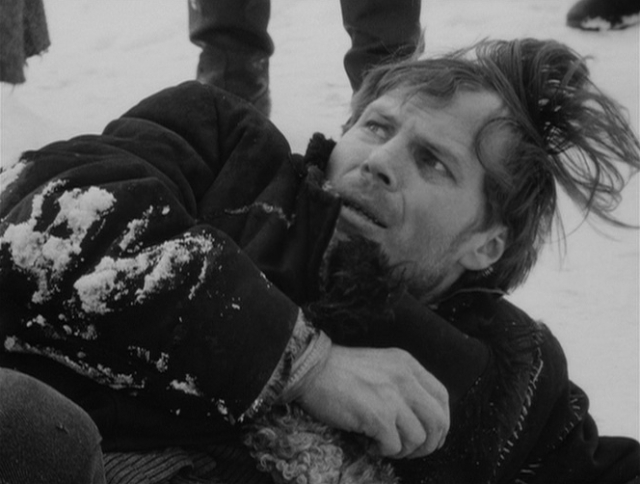
Cinematic Scribblings is inspired by The Ascent
c
Thursday, December 21, 2017
Sober Reflections
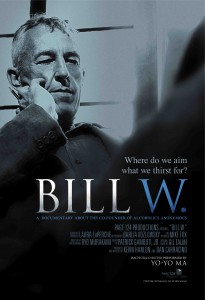
William G. Wilson, known to many as Bill W., was the founder of an organization that eventually became known as Alcoholics Anonymous. Founded in 1935 by Bill and his co-founder, Robert H. Smith (known to members as Dr. Bob), the organization proved to be the solution for many people who had been victims of the disease known as alcoholism. Bill is revered alternately as a hero and a savior to many who have recovered from the depths of alcohol addiction, and the program for which he was a founder has gone on to help millions of people live a life free from the addiction.
Bill W. (2012):
This is a documentary on the life of Bill Wilson from his early childhood through to his death in 1971. The movie mixes lots of information from what is known about Bill and Dr. Bob along with some spatterings of re-enactments (much like many History channel programs), with actors portraying the principal figures. Much of the story is well-known to members of Alcoholics Anonymous, but it is probably news to many who are not familiar with the organization.
The movie begins with discussing Bill's feelings of isolation as a child, and his early life as a young adult. He was a soldier in WWI before he ever took his first drink, but it was the start of a long downward spiral. His travails in married life with his wife, Lois (nee Burnham), as well as his many attempts to try to curb and/or conquer his addiction are covered in great detail. Bill spent most of the alcoholic portion of his life trying to make a fortune in stock market endeavors, but always his addiction managed to bring a dramatic end to whatever successes he managed to garner.
His turning point was when he met up with his old drinking buddy, Ebby Thatcher (Ebby T.), who presented Bill with a solution that he, Ebby, had found with a group called the Oxford Group. Although Bill did not become sober right away, the seed was planted that eventually led to a spiritual experience a short time later. The story progressed from there as Bill, trying to regain his financial success, was stranded in Akron, Ohio. Dejected with a recent failure, and broke, Bill considered resuming drinking, but instead used a hotel directory to call local churches to see if he could find another alcoholic to help.
It was at this point he was introduced to Dr. Bob, a doctor whose alcoholism seriously threatened to derail him as a practitioner of medicine. The meeting of the two was the spark of the organization that eventually became what is now called A.A. The second half of the film covers the many trials that came while trying to get the organization off the ground, and continues on through the death of bill's friend, Dr. Bob, and ends with the organization surviving and thriving, even after the death of the acknowledged mentor Bill.
There are plenty of recordings of the real Bill W. speaking at conventions and the like, albeit with the actor portraying him being used for actual footage. (The anonymity factor of the organization precludes that there is any existent film footage of Bill actually speaking at A.A. related events, although there are plenty of home movies style clips of him and Dr. Bob in a non-speaking role, and a couple of him and Lois being interviewed outside of A.A.)
The film may not be interesting to many who have no interest in the A.A. program, I admit, but for some it may be educational in how a serious addict was able to eventually overcome his addiction, with the help of his Higher Power (A.A.s tend to shy away from calling their spiritual helper by the name "God", although the term does appear in their literature.) I found it to be extremely riveting. I also noted that in some clips of Bill's friend, Dr. Bob looked a lot like Christopher Lloyd...:-) A TV drama has already been made by the name of My Name is Bill W. which starred James Woods and James Garner as Bill W. and Dr. Bob respectively, and Woods won an Emmy for his role, but I think it would be interesting if they decided to make a theatrical release to have Lloyd play the man whom he seems to resemble. (Can't really decide who Bill looks like, so I'll defer casting him at this point.)
The film is entertaining on its own level. As a footnote, in one of the last films Roger Ebert critiqued before his death, gave it a 3 out 4 star rating.
Quiggy
Subscribe to:
Posts (Atom)